πŸ”’
❌
Es gibt neue verfΓΌgbare Artikel. Klicken Sie, um die Seite zu aktualisieren.
Γ„ltere BeitrΓ€geHaupt-Feeds

How To Fix pipx: Fatal Error From pip Prevented Installation / No Module Named pip

04. Mai 2023 um 20:52
Von: Logix

After upgrading from Ubuntu 22.10 to 23.04, pipx broke on my laptop and fixing it was not exactly straight-forward, so I thought I'd write here about this, in case there are others running into this issue. While I ran into this issue on Ubuntu, this isn't Ubuntu-specific, and it can happen on other Linux distributions as well.

pipx is a tool that makes it easy to install (using PyPI as the package index) isolated Python applications. pip is a Python package installer for both libraries and apps, while pipx is made specifically for applications, creating an isolated environment for each app and its dependencies.


[[ This is a content summary only. Please visit Linux Uprising for the full article ]]

--------------------------------------------------------------------------
Originally posted on Linux Uprising Blog.

Hanabi Is A Live Wallpaper For GNOME Desktop

17. April 2023 um 19:53
Von: Logix
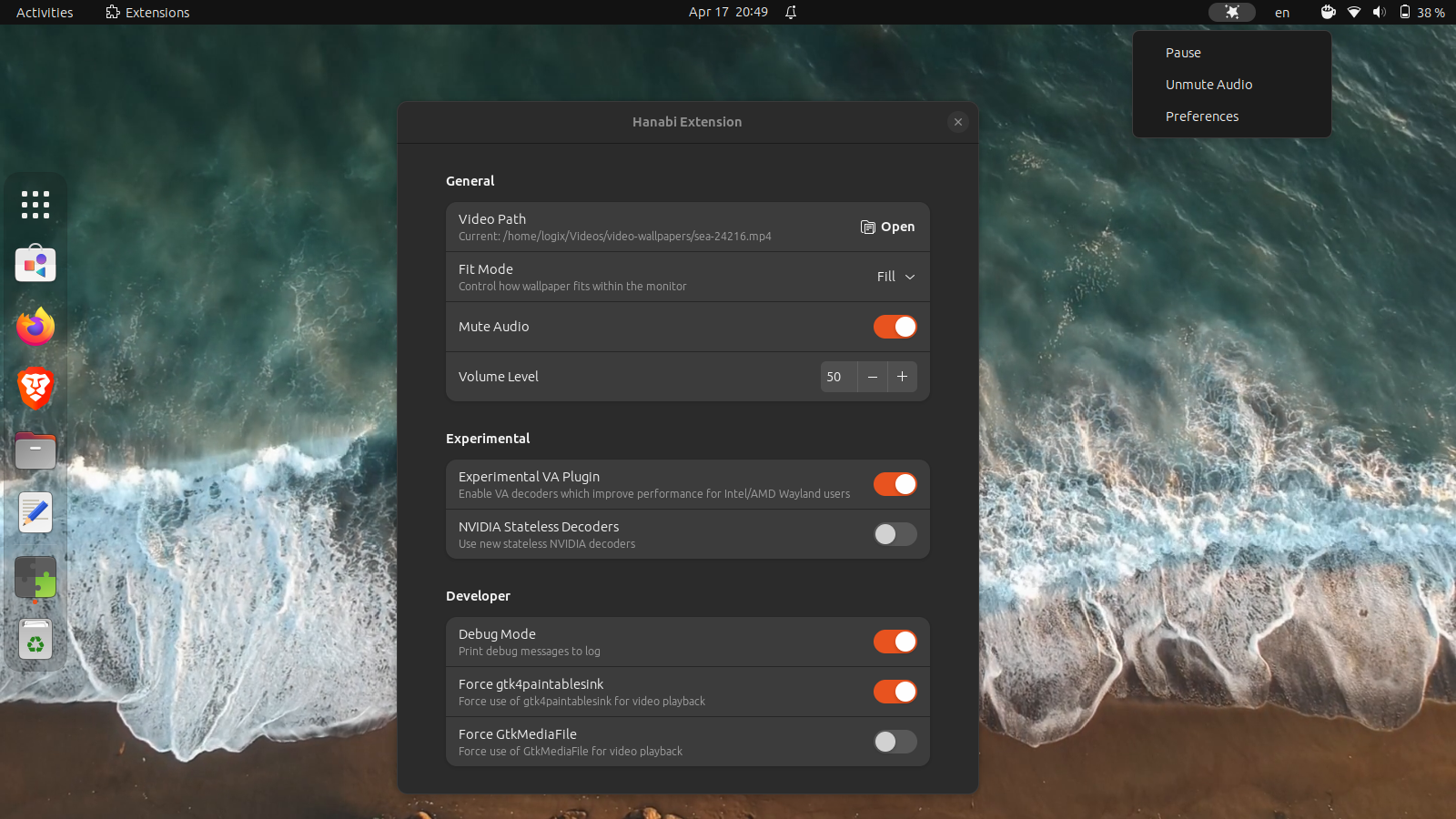
Hanabi gnome shell live wallpaper

Hanabi is a GNOME Shell extension that allows using a live wallpaper (video) on the GNOME desktop, with support for both X11 and Wayland.

According to the developer, the extension β€œis not even close to alpha quality”, but it's already usable, albeit you'll need to install it manually since it's not available on the GNOME Shell extensions website.

This live wallpaper GNOME extension currently supports playing a local video as your desktop background, with or without audio, and the ability to set the audio volume. From the extension top bar menu, you can pause the video and mute/unmute the audio.

To get the video playback to use less CPU, the extension comes with experimental support for VA-API hardware acceleration, as well as the ability to use the new Nvidia statless decoders. For best performance, the extension can utilize clappersink from Clapper (a GNOME media player that uses GStreamer as a media backend and renders everything via OpenGL)β€”this needs to be installed as a native package, and not as a Flatpak package. The extension GitHub page has a performance comparison on using Hanabi live wallpaper for GNOME with and without clappersink.

From the extension preferences, you can control how the live wallpaper fits within the monitor, allowing users to set the fit mode to fill, contain, cover and scale-down.

This is a short video I've recorded with Hanabi GNOME live wallpaper running on GNOME 44 (X11):


[[ This is a content summary only. Please visit Linux Uprising for the full article ]]

--------------------------------------------------------------------------
Originally posted on Linux Uprising Blog.

Search, Install And Update GNOME Shell Extensions From The Command Line Using gnome-extensions-cli

16. Februar 2023 um 18:50
Von: Logix
gnome-extensions-cli

gnome-extensions-cli is an unofficial GNOME Shell extension manager for the command line. It can install, update, enable / disable, remove and search GNOME Shell extensions.

This command line tool is great if you don't want or can't use a web browser (which requires also installing an extension and a connector) to install GNOME Shell extensions, and you like using the command line.Β 

If you prefer using a graphical user interface to manage GNOME Shell extensions (including installing new extensions, searching extensions on the GNOME Extensions website, updating installed extensions, etc.), check out Extension Manager.


[[ This is a content summary only. Please visit Linux Uprising for the full article ]]

--------------------------------------------------------------------------
Originally posted on Linux Uprising Blog.

Translate Selected Text With A Keyboard Shortcut Using Crow Translate (X11 + GNOME Wayland)

13. Februar 2023 um 21:03
Von: Logix

I was looking for a way to easily translate selected text that works under GNOME with Wayland, and find out that Crow Translate provides just this, but with some tweaking.

Highlight some text on your Linux or Microsoft Windows desktop (web browser, text editor, etc.), press the assigned keyboard shortcut, and the text is instantly translated (usingΒ Google Translate, Yandex, Bing, LibreTranslate and Lingva) and shown in a new window that disappears when losing focus. It can also speak the selected text or the translation of the selected text. There are some browser extensions that can also do this, but Crow Translate can translate the text from any desktop application that lets you select text.

This feature works out of the box on any X11 desktop. Under GNOME with Wayland, the Crow Translate feature to translate selected text with a keyboard shortcut only works with XWayland applications by default, but manually setting up the keyboard shortcuts gets this to work with any application, including pure Wayland applications, so I thought I'd write about how to do this. This does not work on KDE Plasma with Wayland, and I'm not sure about other Wayland DEs, that's why this article only covers GNOME.

Crow Translate isn't just about using a keyboard shortcut to translate the selected text, but that's what I was interested in, and thought I'd share this with you. Crow Translate also includes a regular window where you can enter the text to translate, etc., as well as a tray icon.

Using Crow Translate to translate selected text is pretty straightforward. Select some text and press the global shortcut key, Ctrl + Alt + E by default (it can be changed from the application settings), and you'll be presented with a window that shows the translation of the text you've selected:

Crow translate popup


[[ This is a content summary only. Please visit Linux Uprising for the full article ]]

--------------------------------------------------------------------------
Originally posted on Linux Uprising Blog.

How to Change Ubuntu’s Login Screen Background

21. Januar 2022 um 06:27

Want to change Ubuntu's login screen background? I walk through the steps for changing GDM background to a solid colour, gradient, or custom image.

This post, How to Change Ubuntu’s Login Screen Background is from OMG! Ubuntu!. Do not reproduce elsewhere without permission.

Extension Manager: Search And Install GNOME Shell Extensions Without Using A Web Browser

10. Januar 2022 um 10:39
Von: Logix

Extension Manager is a new, unofficial application to browse and install GNOME Shell extensions from your desktop, without having to use a web browser.Β 

Besides allowing users to search and install extensions from extensions.gnome.org, the tool can also enable or disable extensions (and display a list of installed extensions), access the extension settings, and uninstall extensions.

Read more Β»

[[ This is a content summary only. Please visit Linux Uprising for the full article ]]

--------------------------------------------------------------------------
Originally posted on Linux Uprising Blog.

Fly Pie Is A GNOME Shell Launcher For Users With One Hand On The Mouse Most Of The Time

06. Dezember 2021 um 11:09
Von: Logix
Fly Pie GNOME Shell

Fly Pie is a GNOME Shell launcher (available as an extension) designed for users who have one hand on the mouse most of the time. It can be used to launch applications, URLs, recent files, simulate hotkeys, access the clipboard, and more. It works under both X11 and Wayland.

With Fly Pie, you use a keyboard shortcut to open a menu, then use the mouse to do the rest. Once you open a menu, there are three alternative selection modes: point and click (select an item by clicking on it), marking mode (select items by drawing gestures) and turbo mode (draw gestures while holding Ctrl, Shift or Alt without having to press your mouse button).

Read more Β»

[[ This is a content summary only. Please visit Linux Uprising for the full article ]]

--------------------------------------------------------------------------
Originally posted on Linux Uprising Blog.
How To Use Guake Terminal Under Wayland (GNOME)

01. Dezember 2021 um 11:37
Von: Logix
Guake Wayland GNOME

This article explains how to get Guake drop-down terminal to work properly under Wayland (GNOME). I've tested this using GNOME desktop running on Ubuntu 21.10 with a single monitor, because I currently don't have access to multiple monitors.

Guake is a Python-based drop-down terminal for the GNOME desktop which includes split terminal functionality, session save/restore (restores panes and tabs), support for transparency, and many other features.Β 

It's inspired by the famous Quake console - the terminal stays hidden until you press a key (default is F12). Execute a command, then press the same key again to hide the terminal, going back to your previous task without breaking your workflow. You can also set Guake to automatically hide when it loses focus.

Read more Β»

[[ This is a content summary only. Please visit Linux Uprising for the full article ]]

--------------------------------------------------------------------------
Originally posted on Linux Uprising Blog.
  • Es gibt keine weiteren Artikel
❌